
 Türkçe
  English
 What Are Integrated Small and Large Livestock Production Systems? Key Elements of Modern Farming Infrastructure






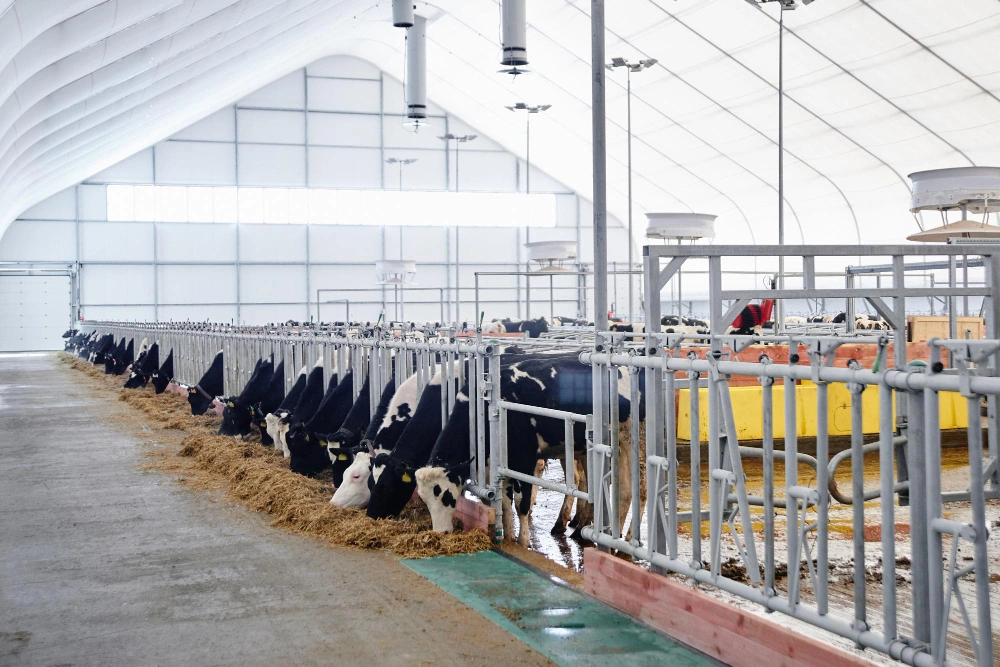
The livestock industry today is evaluated not only by production capacity but also by criteria such as animal welfare, biosecurity, efficiency, and sustainability. With this transformation, traditional production models are being replaced by integrated systems where all processes are managed in harmony.
Integrated small and large livestock production systems represent a modern approach in which housing, feeding, health, environmental conditions, and operational processes are planned within a unified structure. The main goal of these systems is to create a more controlled production environment, minimize risks, and ensure long-term efficiency.
What Does Integrated Production Mean?
Integrated production refers to managing all livestock-related processes not as separate operations, but as interconnected and complementary systems. This approach allows every stage of production to be planned, monitored, and optimized effectively.
In modern facilities, this system includes multiple components such as veterinary health control, biosecurity protocols, climate control systems, digital monitoring, and operational management. As a result, production errors are reduced while quality standards are significantly improved.
The Importance of Infrastructure in Small and Large Livestock Farming
Although small and large livestock farming have different operational dynamics, infrastructure plays a critical role in both systems. A well-designed facility ensures that animals are raised in healthier conditions while enabling producers to manage processes more efficiently.
Especially in growing operations, modern infrastructure should not be seen merely as a physical space, but as a system that enhances process management. This leads to increased workforce efficiency and consistent production performance.
Key Elements of Small Livestock Production Systems
Success in small livestock farming depends not only on herd management but also on proper facility planning. It is essential to create an infrastructure that supports natural animal behavior, reduces stress factors, and maintains optimal health conditions.
- Regular veterinary health checks and monitoring systems
- Comprehensive biosecurity infrastructure including controlled access and disinfection processes
- Climate control systems that regulate temperature and humidity automatically
- Balanced space planning and effective hygiene management within shelters
Proper implementation of these elements directly improves both animal welfare and production efficiency in small livestock farming.
Efficiency Approach in Large Livestock Facilities
As the scale of large livestock farming increases, the need for structured and systematic infrastructure becomes more critical. Modern large livestock facilities are equipped with high-capacity barns, advanced feeding systems, and continuous monitoring technologies.
- 24/7 monitoring and data tracking through sensors and digital systems
- Preventive health programs and structured vaccination plans
- Quarantine and isolation areas to control disease risks
- Standardized feeding and maintenance processes
This structure ensures both animal health and a more predictable production performance.
The Relationship Between Animal Welfare and Sustainable Production
Animal welfare is one of the most critical factors at the core of modern livestock production. Animals raised under optimal conditions tend to be healthier, which directly impacts productivity and overall production quality.
Clean living environments, proper temperature and humidity balance, regular health monitoring, and reduced stress levels are the key components of sustainable livestock production.
Conclusion: Integrated Systems Are the Foundation of Modern Livestock Farming
Integrated small and large livestock production systems have become an essential part of modern farming practices. This structure, where all processes are interconnected and managed holistically, provides operational advantages for producers while ensuring higher quality and more reliable production.
The future of livestock farming is built on systems that are controllable, traceable, and sustainable. Therefore, investments in integrated production infrastructure directly contribute not only to present performance but also to long-term success.